
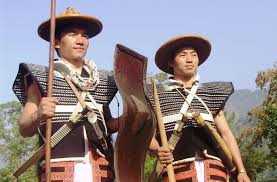
Idu Mishmis are one of the significant indigenous tribes of Arunachal Pradesh domiciled in the districts of Dibang Valley, Lower Dibang Valley, Lohit and few pockets in the vicinity of East Siang and Upper Siang.
The funeral traditions of Idu Mishimis are very unique in nature. Generally the funeral rituals are performed 3 to 5 days and it depends upon the nature of death. The Idu Mishimis believe that there is a continuation of life after death. It is believed that after death life is transformed from the materialistic world to the divine world i.e., the land of soul which is locally known as muduasialoko. Igu, the shaman, plays an important role in funeral rituals.
He performs a number of rituals, dance and music, and offerings in the house of the dead continuously for days and nights together without sleeping and the people who are mourning in the house should not leave the house without the permission of the Igu. After the ritual performances in the house of the dead, the Igu performs several rituals in broacha, the graveyard, and accompanying the soul from the house of the dead (aatiyakong) to the land of the souls (asialoklo).
Songs of Shaman:
The shamans have important function in clan-life of different tribes of Arunachal Pradesh. In Arunachal Pradesh among different tribes, Shaman is mostly seen as a diviner, communicator, negotiator, healer, ritual specialist, and religious expert but neither as a magician nor a mystic. S/he is the middleman between human and spirits who can communicate with the spirits on their behalf.
As Tani people believe in the existence of spirits, they need human specialists, a shaman, who have experience and can get access to the spirit world as a communicator. Each clan has important religious specialists who initiate and foster contact with the spirits and divinities. They will contact the spirits and convey the messages between human and spirits. They have the power to call the spirits for blessings, support and protection against evil. They also have the power to enter into the spirit world and to communicate and negotiate with them that cause people to become sick.
They enter into a dialogue with the spirits and ask for prosperity and health of the members of the clan. Shamans are also the store house of traditional knowledge in the form of legends, myths, ritual incantations etc. They are well versed in ritual performances and knowledge and wisdom associated with it.
Sowa-Rigpa (Knowledge of Healing or Science of Healing):
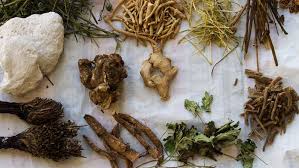
Sowa-RigpaThe term Sowa Rigpa is derived from Bhoti language which means ‘Knowledge of Healing’. It is an ancient Indian medical system concieved and propounded by Lord Buddha in India and later was enriched in the entire Trans- Himalayan region. Sowa Rigpa has been developed and incorporated into different environmental and cultural contexts through the centuries.
(Sowa-Rigpa has moulded itself into the socio-cultural lineage since ages), where every village has had an Amchi family to look after public health. Today, Sowa Rigpa is acknowledged as a traditional medical system by the governments of India, Bhutan, Mongolia and Tibet. The principle medical text “rGyud-bZi” (Chatush Tantra-a texbook of fundmental principles of Sowa-Rigpa in Sanskrit language) was pioneered by Lord Buddha and translated into Bhoti language around 8th -12th Century and amended by Yuthok Yontan Gombo and other scholars of Trans Himalayan region according to the socio-climatic conditions.
The fundamental principles of Sowa Rigpa is based on Jung-wa-nga (Panchmahabutha), Nespa-sum (Tridosha), Luszung-dun(Saptadhatu) etc. According to Sowa- Rigpa health is an equation of balance of tridosha (English translation) and five cosmophysical energies (Panchmahabuta), balance within the body, balance with the enviornment, and with the Universe.
Pulse examination and astrological evaluation/analysis of an individual are the unique diagnostic tools in Sowa-Rigpa. The natural resources which are safe, effective and time tested are used as the sources of medication. Sowa Rigpa education, healthcare delivery and research is formally recognized and promoted by the Government of India.
Lores and Rituals of Nocte
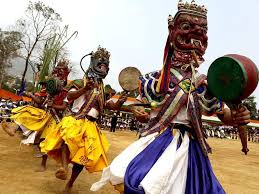
Lores and Rituals of Nocte tribeThe Noctes are one of the major tribes of Arunachal Pradesh. They occupy the North Eastern part of the Tirap district which forms a part of the mountainous tract of the North-eastern frontier of India and upper Myanmar. The Noctes celebrate two major festivals in the villages called Chalo and Ronglo every year. The purpose of celebrating the festival is to propitiate the god, Almighty Rang for his blessing in order to attain good crops and wellbeing of the village. The festival being celebrated in Lazo area of the Olos is known as Worang.
The way of celebration differs from village to village. The Ronglo festival is celebrated during May-June, after reaping the millet. Some villages have now given up millet cultivation and therefore they do not celebrate this festival. The Chalo festival is celebrated during November every year. This celebration has a special significance to the villagers. These festivals signify the end of one cycle and the beginning of another. The new Jhum cultivation is taken up immediately after this festival.
Deere Yameng
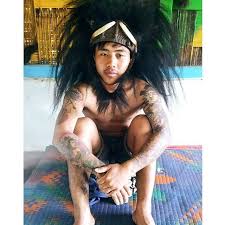
Deere Yameng Adi Tribe of ArunachalThe Adi Tribe of Arunachal had a grand traditional socio-cultural institution called ‘DEE:RE’, which used to be the epicentre of day to day village activities like festival, social Taboo, rituals, cultivation and religious ceremony. All activities concerning the village relating to emergency situations, discrimination, knowledge, hunting to agricultural matters and entertainment including festivities are decided and started in the DEE:RE with religious fervour. It is simply considered as a community hall but it has its own origin importance and mythologies attached to it.
It is also considered as the centre for empowering the priest and sages for excellence in the field of music, dance, Drama and oral knowledge. Therefore, this Socio-Cultural institution was also considered as the temple of learning in the past. The village youth (Yameng) who attained the age of adolescence were mandated to attend the temple daily to undergo training in the socio-cultural and religious fields including performing arts normally for a two year duration.
The senior group of the Yameng took the responsibility to contact reputed ‘Gurus’ for teaching in the temple in various fields like singing folk songs – Ponung, Bare Delung, Pange Dirge and on their accompanying dance. Besides, these Yameng were trained to be volunteers of the village and were called upon at short notice during emergency situations. This type of training and teaching with social support used to instill confidence among the yameng’s and adherence to their own faith and culture.