
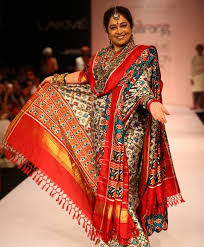
Patola silk textiles are produced by resist dyeing of warp and weft threads before weaving, a complex process known as double ikat which is also practised in other parts of India and abroad. However, Patola of Patan (Gujarat) is unique in its geometric floral and figurative patterns executed with precision of design planning, and meticulously accurate weaving alignment which results in precise outline of the patterns. This requires immense visualisation and coordination skills. The practitioners of this craft are the Salvis, who get their name from ‘sal’ (Sanskrit for loom) and (the rosewood sword used in a Patola loom).
Patola has traditionally been considered auspicious among certain Gujarati communities – Nagar Brahmins, Jains, Vohra Muslims and Kutchi Bhatias. Historically, Patola was a prestigious item of Indian export to Indonesia and Malaysia where it was used as a symbol of power and authority and even attributed protective, curative and magical powers.
There are only four existing Patola-making families striving to save the craft in the face of many threats – huge investment of time and money, low returns, and lack of interest for continuing the craft among the younger generations.
Rathwa ni Gher: Tribal Dance of Rathwas
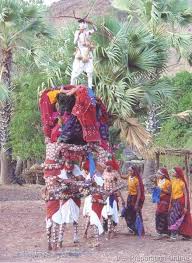
Rathwa ni Gher GujaratThe Rathwas, who dwell in Rath-Vistar, the hilly area of the southeastern part of Gujarat state, perform the Rathwa ni Gher dance on the occasion of Holi (festival of colours) also known as Kavant festival, named after the place where the Holi carnival takes place. The Gher (dance with music) performances begin on Dhulendi, which is, literally, ‘the day of flying coloured dust’. This is the day when people smear each other with colour powder. The festivities last for five days during which the Rathwas observe fast and abstain from sleeping on cots, washing clothes and bathing.
Both men and women perform the Gher together, in groups of 20 to 25. The entire village community and people from neighbouring areas participate in the festivities. Of all Rathwa dances performed on various occasions linked with the cycle of seasons, Rathwa ni Gher stands out as exquisite, colourful and spectacular.
The intricate make-up, the synchronised footsteps, vigorous whirling of the dancers and the mesmerizing symphony created through indigenous musical instruments show how antique and refined the dance form is it constitutes the Rathwas‘ creative expression of their religiosity cultural identity and understanding of the nature.
Sankheda Nu Lakh Kam: Lacquered turned wood furniture of Sankheda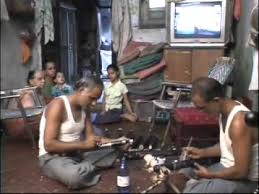
Sankheda Nu Lakh Kam GujaratSankheda, a small town in the eastern region of Gujarat derives its name from ‘sanghedu‘, the word for a lathe in the Gujarati language. The town has about 80-100 families belonging to the ‘Kharadi-Suthar’ community identified with the occupation of wood turning. Lacquered, turned wood furniture with hand painted motifs and traditional method of ornamentation, popularly known as Sankheda furniture, is thought to have been produced in the town from about 1855.
The traditional craft process of making Sankheda furniture involves shaping and painting the members while the craftsman is turning the lathe. He wields the brush with great mastery to map the patterns freehand, achieving symmetric and even contours without using any measuring device or markings. As most of the craftsmen in Sankheda town are involved in this craft it gives them a strong sense of community identity and continuity.
The ornate nature of the product lends itself to becoming a visible symbol of expression that has been identified as Gujarati within its local precinct and elsewhere. There is a wide range of furniture items produced including child‘s cradles, child‘s walkers to chairs, tables, and large swings, a response unique to tropical and humid climate.