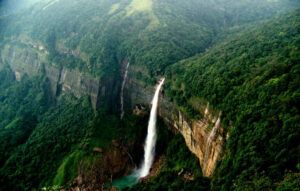
One of the least spoilt countries in the mighty Himalayan range, Bhutan boasts incredible mountain scenery and endless verdant forests, whilst shrouded in Buddhist myth and legend and replete with a plethora of incredible and beautiful birds! On a typical day’s birding with us in this avian wonderland, you will find yourself in breathtaking surroundings searching for legendary birds in pristine forests, with mighty Himalayan peaks towering in the distance – all in all, Bhutan is a destination like no other! As we journey through this fabled land we will regularly cross dramatic mountain passes, that are adorned with brightly colored prayer flags and chortens (temples), and these give way to vast countrysides often dominated by impressive dzongs (temple-fortresses) that so characterize this unique country. We look forward to having you aboard this adventure through a paradise of culture, birds and scenic vistas as we explore the heavenly riches of Bhutan!
Tour Plan
Day 1: Arrive from India into Bhutan, Samdrup Jongkhar.
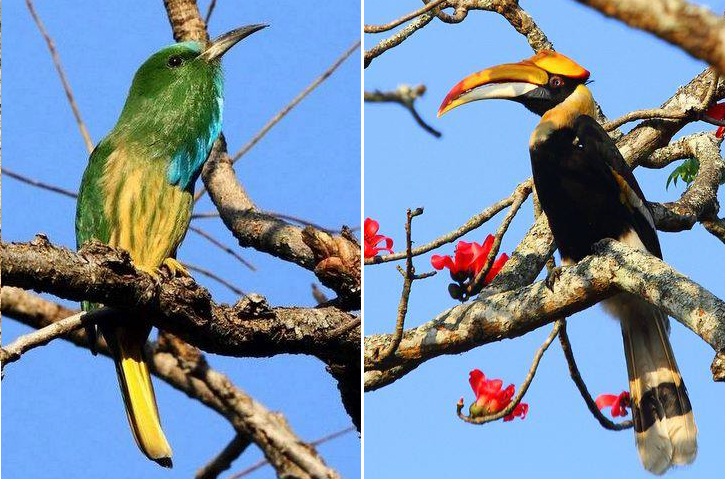
For those not doing the Assam Extension, the tour will begin in the Indian town of Guwahati, after which we will cross the border from India into the south-eastern corner of Bhutan where we will meet our local hosts and our Bhutanese birding adventure will begin! This tour is timed to coincide with the glorious advent of spring, offering an exceptional visual spectacle and a host of exciting and mouth-watering birds. Bhutan is a remote country, still remarkably isolated from much of the distractions of the modern world, and we are privileged to be among the lucky few to visit this fascinating land. If time allows we will do some introductory Bhutanese birding around town where we may find a few characteristically low-altitude species such as gaudy Blue-throated, Coppersmith and Lineated Barbets, Blue-bearded Bee-eater, Indian Pond Heron, Ashy Woodswallow, Cinereous Tit, Chestnut-tailed Starling and Pied and Great Mynas.
Day 2: Samdrup Jongkhar to campsite near Morong.
This morning we will begin our journey into the mountains and higher altitude forests that so characterise this fabled land. As we journey into Bhutan’s forested foothills, the transition from the vast lowland plains of India is stark and characterized by a refreshingly variable topography. We will spend the morning exploring the foothills surrounding Samdrup Jongkhar. The remnant forest patches and small stands of bamboo that hug the river outside of town support a number of exciting lowland species. Lowland specialities that we will be on the lookout for this morning include the impressive Wreathed and Great Hornbills, Mountain Hawk-Eagle, Mountain Imperial Pigeon, tiny Grey-capped Pygmy Woodpecker, Common Iora, Rufescent Prinia, bright blue Black-naped Monarch, beautiful red-and-black Scarlet Minivet, Black-crested, Ashy and Black Bulbuls, Pin-striped Tit-Babbler, Golden-fronted Leafbird, bamboo-dwelling Yellow-bellied Warbler, White-rumped Shama, outrageous Sultan Tit, brilliant Asian Fairy-bluebird and stunning Long-tailed Broadbill.
Rocky streams in the area harbour the prominently patterned Black-backed Forktail as well as Slaty-backed Forktail, White-capped and Plumbeous Water Redstarts, Grey Wagtail, Brown Dipper and Crested Kingfisher. There is also the possibility of seeing some of the area’s rarely encountered birds such as Dark-rumped Swift and Pied Falconet. If we are fortunate to find a fruiting fig tree we may be treated to a host of gaudy frugivores including hornbills, barbets and colourful species of green pigeon that are attracted to this irresistible food source.
After lunch, we will head further north, through the forested foothills, towards our campsite near Morong. The remainder of the afternoon will be spent birding a stretch of beautiful, mossy, mid-altitude broad-leaved forest. Our main target here is the extremely special and aptly-named Beautiful Nuthatch. Other interesting species we may encounter this afternoon while searching for the highly-sought nuthatch include Black-faced Warbler, Grey-headed Canary-Flycatcher, Black- Sultan, throated Bushtit, Striated Laughingthrush, Long-tailed Sibia, the sensational Silver-eared Leiothrix and awesome Rufous-necked Hornbill, to name a few.
Tonight we will enjoy the first of many nights camping throughout the country. Our comfortable canvas tents will be set up ahead of time with a picturesque view of the forested valley below. When we arrive in camp our crew of backup staff, including our own chef, will be ready to serve us tea, coffee and a hearty traditional meal.
Day 3: Morong area.
We will spend the entire day birding and exploring the lush forests around Morong. The foothill forest here pulsates with bird life and we will really be able to get stuck into the vast array of wonderful Bhutanese birds that inhabit these forests. We are sure to be entertained at breakfast by a number of delightful species such as Rusty-cheeked Scimitar Babbler, Little Bunting, immaculate Blue-fronted Redstart and Russet Sparrow that often move through the edge of the camp in the early morning. We are also likely to see our first of many vivid Blue Whistling Thrushes, chattering Green-backed Tits, Whiskered Yuhinas, Rusty-fronted Barwings and colourful Chestnut-tailed Minlas this morning. These extremely attractive species will be seen commonly throughout the tour but are always a pleasure to encounter.
Some of the other eye-catching and vibrant species that we may see today include White-naped Yuhina, Streaked Spiderhunter, striking Orange-bellied Leafbird, secretive Blue-winged and Grey-sided Laughingthrushes, Hume’s Treecreeper, Streak-breasted Scimitar Babbler, brilliant Scarlet Finch, gorgeous Black-eared Shrike-Babbler and Yellow-throated Fulvetta. Brown-flanked Bush Warblers call from forest-edge thickets and we may even see a soaring Crested Goshawk as well as Black Eagle and Rufous-bellied Hawk-Eagle overhead.
Day 4: Morong camp to Trashigang.
Today we continue our journey into the heart of the country, passing through lofty forests and rhododendron-filled valleys as we make our way to the slopes of Yongphu La. Several birding stops will be made along the way in areas of lush, verdant, montane forest. Some of the desirable species that we will be on the lookout for this morning include the much sought-after Ward’s Trogon, highly nomadic Golden-naped Finch, scarce White-spectacled Warbler, Rufous-winged Fulvetta, exquisite Green-tailed Sunbird, Yellow-cheeked and Yellow-browed Tits, White-tailed Nuthatch and Fire-breasted Flowerpecker. Himalayan Vulture can be seen soaring overhead while noisy bands of Black -eared Shrike eared Shrike scurry off the road edges. We will also keep our eyes open for the Migratory White-throated Needletail that could turn up almost anywhere.
In the late morning we will search carefully in the vicinity of the large Giant Rock Bee nests clinging to cliff faces for the rare Yellow-rumped Honeyguide, one of only two species of honeyguide found in Asia and if we are very lucky we may even happen across a Wallcreeper as we slowly meander to the top of Yongphu La. After winding our way through a series of pine-clad slopes we will arrive in the settlement of Trashigang in the late afternoon. In the vicinity of our hotel, we will have our first opportunity to experience the village life of the Bhutanese people. The local markets here showcase a great variety of sundries including grains, garlands of dried chillies, hand woven silk garments, bamboo crafts, hocks of yak meat, fermented cheese balls and colourful textiles. Trashigang is situated at the foot of a steep wooded valley, and within the town, it is possible to visit the scenic Trashigang Dzong that overlooks the confluence of the Dangme Chu and the Gamri Chu.
Day 5: Trashigang to Lower Lingmethang Road (Yongkola).
Today will be a fairly long travel day as we make our way towards Kori La passing through dry, shrubby hillsides and native Chir pine forest where we may encounter Himalayan Bulbul, Striated Prinia, Blue-capped Rock Thrush, Hodgson’s Redstart and noisy flocks of extravagant White-crested Laughingthrush. We will wind our way through breathtaking Himalayan scenery on narrow but good roads that tightly hug the dramatic slopes of the middle Himalayas.
Passing over the lofty Kori La, adorned with an array of colourful prayer flags, we will stop to search through the stands of rhododendrons and stunted growth for several mid-altitude species. Specials include Darjeeling Woodpecker, Chestnut-crowned Laughingthrush, dazzling Green-tailed Sunbird, migrant Blue Rock Thrush, Grey-winged Blackbird, striking Yellow-billed Blue Magpie, Slaty-blue Flycatcher, Black-faced Warbler, Rufous-winged Fulvetta, Rufous-breasted Accentor and the flame-throated Red-billed Leiothrix that moves secretively through forest undergrowth. Here we also have further chances for the rare Ward’s Trogon and Golden-naped Finch as well as the highly-elusive Black-headed Shrike-Babbler. We may also encounter nomadic seed-eaters like Crimson-browed Finch and Yellow-breasted Greenfinch.
After passing through the fair-sized village of Mongar we will drop right down to 600m and break for lunch in an open field where Rufous-necked Laughing thrushes and Crested Buntings often forage. The remainder of the afternoon will be spent birding the lowland forest patches above the town of Lingmethang. Here we may encounter the lime-coloured Common Green Magpie, Chestnut-winged Cuckoo, Slaty-backed Forktail, Yellow-vented Warbler, blue-and-white Ultramarine Flycatcher and Black-chinned and Striated Yuhinas. In the late afternoon, we will continue to our campsite on the lower reaches of the fabled Lingmethang Road where we will be based for the next three nights.
Day 6 & 7: Lower Lingmethang Road (Yongkola).
The Lingmethang Road is rightfully famous among birders and is often regarded as one of the best birding sites in all of Asia as it affords the birder an opportunity to access the seemingly endless tracts of pristine broad-leaved and coniferous forest that spans across a vast altitudinal range. All this is protected within the Thrumsing La National Park and we will spend a full five days covering the various different habitats and altitudes along this road in search of the area’s splendid diversity of birds and interesting mammals.
We are fortunate to have two full days set aside along the lower portion of the road to explore the rich forest, peppered with orchids and draped in vines and alive with the sights and sounds of some of the most wonderful birds in all of the mighty Himalayas! Likely to steal the show are several of Asia’s most sought-after birds and two of our main targets, the beautiful but rare Ward’s Trogon (the male an unbelievable pink and the female an unusual lemon yellow!) and the incomparable and endangered Rufous-necked Hornbill.
Additional delectable species we will be searching for here include flocks of busy Greater Rufous-headed and Black-throated Parrotbills, Golden-breasted and Yellow-throated Fulvettas, the shy Rufous-throated Wren-Babbler, Lesser Yellownape, Crimson-breasted Woodpecker, the vivid Asian Emerald Cuckoo, Grey-cheeked and often-elusive Broad-billed Warblers, radiant Large Niltava, White-naped Yuhina, White-tailed Robin, the much-desired Coral-billed Scimitar Babbler, unobtrusive Mountain Tailorbird, outrageous Himalayan Cutia, Little Forktail, resplendent Mrs. Gould’s Sunbird, secretive Blue-winged and Grey-sided Laughingthrushes and one of Asia’s most difficult laughingthrushes, the elusive Scaly Laughingthrush. Two of the rarest birds that we might come across here are the bizarre and once near-mythical Sikkim Wedge-billed Babbler and Long-billed Wren-Babbler.
Day 8 & 9: Lingmethang Road camp upper level (Sengor).
We will spend the next two days enjoying the fine selection of birds on offer in the upper reaches of the Lingmethang Road. The forests here exhibit well-known northern hemisphere plants such as spruce, hemlock and fir and are simply a delight to bird.
Targets in this area include Black-faced, Chestnut-crowned and Spotted Laughingthrushes, the secretive Rusty-flanked Treecreeper, shy and reticent Plain-backed Thrush, Tibetan Serin that flock in large groups, the widespread but bizarre-billed Red Crossbill, Slender-billed Scimitar Babbler, which skulks through the dense undergrowth, Green Shrike-Babbler, noisy Spotted Nutcracker, striking Golden-naped Finch, skulking Scaly-breasted Wren-Babbler and White-browed Shortwing, tiny Chestnut-headed Tesia and the delightful Bar-winged Wren-Babbler. Notably, the steep forested slopes in this area are well-renowned for harbouring one of the most stunning birds on the planet – the incredulous Satyr Tragopan – and we will endeavour to track down this regal pheasant during our time here!
Day 10: Sengor camp to Bumthang.
Today we ascend the slopes that surround Thrumsing La National Park through a diversity of habitats, including stands of bamboo where we will search hard for the large and vociferous Great Parrotbill and if we are extremely lucky the minute Fulvous Parrotbill. We can expect to be entertained by Red-billed Chough, which prefers the open montane ranges, along with Russet Sparrow and perhaps Plain Mountain Finch. We will explore the head of the pass for the dazzling Fire-tailed Sunbird, equally spectacular Fire-tailed Myzornis as well as Grey-crested and Rufous-vented Tits.
Additional species that may entertain us along our journey include Himalayan Bluetail, White-browed Bush Robin and extremely scarce and nomadic Rufous-breasted Bush Robin, the prominently marked White-collared Blackbird, Rufous-gorgeted Flycatcher, Eurasian Wren, Dark-rumped, Dark-breasted and Common Rosefinches, Olive-backed Pipit and the erratic but eye-catching Snow Pigeon. The spectacular drive towards Bumthang then weaves through the indigenous hillside forests past rows of prayer flags and through local villages surrounded by snow-capped peaks. If the day is clear we will be able to see Bhutan’s highest peak, Gangkar Puensum, which reaches a lofty 7,541 meters and remains the highest unclimbed peak on earth!
Day 11: Bumthang to Trongsa.
Our journey this morning passes through numerous small villages and goembas (Buddhist monasteries) settled neatly within the Chume valley. Birds that we will search for along the way include the secretive Brown Parrotbill and extremely localised and subtly attractive Himalayan Beautiful Rosefinch. Passing over the top of Yotong La we can keep an eye out for migrant Eurasian Sparrowhawk and Mountain Hawk-Eagle overhead, White-browed and Golden Bush Robins, bizarre and unpredictable Slender-billed Scimitar Babbler, Spotted and Black-faced Laughingthrushes, Alpine Accentor and White-winged Grosbeak.
We will arrive at our comfortable guest house perched above the village of Trongsa, in time for lunch. Directly after lunch, we will have the opportunity to visit the spectacular Trongsa Dzong, the ancestral home of Bhutan’s royal family. The wide stair rockwork and enchanting stone courtyards provide access to the elaborate internal structure, where resident monks go about their pious endeavours. Located in central Bhutan, Trongsa holds one of the most singularly magnificent dzongs in the entire kingdom, replete with magnificent architecture, an extensive history and golden roofs that glimmer in the sunlight across the valley. Situated high above Mangde Chhu, the Trongsa Dzong is a spectacular sight to behold! The remainder of the afternoon will be spent exploring the nearby broad-leaved evergreen forest in search of specialities like the handsome and boldly-patterned Spotted Forktail, mite-sized Grey-bellied Tesia and Spotted Elachura (Wren-Babbler), which has recently been placed in its own monotypic family Elachuras.
Day 12: Trongsa to Tingtibi via Zhemgang.
Today we will make our way south into the lowlands, keeping watch for species that occur in the deep vegetated valleys, farmlands and rolling hillsides along our route. Noteworthy Species that we may encounter along the way include Little Forktail, Hair-crested Drongo, Oriental Magpie-Robin (thought by many to have one of the most beautiful songs in Asia), confiding Blue-capped Rock Thrush, Speckled and White-browed Piculets, black-and-chestnut Crested Bunting, and if we are very lucky a flock of Spot-winged Starling on migration between their wintering grounds in north-east India to their breeding grounds in northern India. The mossy broad-leaved forest surrounding Zhemgang also harbours some of Bhutan’s very special birds such as Beautiful Nuthatch, Rufous-necked Hornbill and Himalayan Cutia as well as Red-faced Liocichla, Blue-winged Laughingthrush and Hodgson’s Hawk-Cuckoo. Although long, today’s drive is spectacular and the day will undoubtedly yield many avian delights!
Day 13: Tingtibi.
The rarely visited region of Tingtibi south of Zhemgang has turned up amazing birds and rarities in the past. There is a wide variety of habitat here, from mossy, evergreen forest along the main road south of Zhemgang stretching to streamside lowland forest and deciduous thickets in the valley below as well as several good patches of bamboo. The area also supports the endearing Golden Langur, a highly range-restricted monkey that is common here, while even Tiger and Sloth Bear occur in the area, but we would be extremely fortunate to encounter either of these two very rare mammals.
Some of the many lowland bird species we will be looking for include the very secretive Rufous-throated Partridge, nomadic Pin-tailed and Wedge-tailed Green Pigeons, Barred Cuckoo-Dove, stunning Red-headed Trogon, Blue-bearded Bee-eater, localised Rufous-faced and Yellow-bellied Warblers, Lesser Necklaced and Blue-winged Laughingthrushes, secretive Spotted Elachura, Grey-throated Babbler, Nepal Fulvetta, the gaudy Long-tailed Broadbill, tiny Speckled Piculet, noisy Bay Woodpecker, the giant black and yellow Sultan Tit, Banded Bay Cuckoo and Square-tailed Drongo-Cuckoo and two very rare bamboo specialists: the seldom-seen Pale-billed Parrotbill and White-hooded Babbler.
Day 14: Tingtibi to Trongsa.
A final morning birding this diverse area will allow us to seek species we might have missed before we make the return journey to the town of Trongsa. Birding stops in forested areas along our route might produce the furtive White-tailed Robin, partially-diurnal Collared Owlet, electric Common Green Magpie and Striated, Whiskered and Black-chinned Yuhinas. After a long travel day, we will arrive at our guesthouse in the late afternoon.
Day 15: Trongsa to Punakha via Pele La.
Our journey today crosses over the Black Mountains dividing western from central Bhutan at 3,420 meters. Our first scheduled birding stop today will be at a nearby colony of Nepal House Martins that build their cup-shaped nests along a sheer vertical cliff-face. Our next stop will be in an area of temperate broad-leaved forest and bamboo understory where targets include the striking Golden-breasted Fulvetta, nomadic and unpredictable Black-throated Parrotbill and the very uncommon Brown Bullfinch. As we begin our ascent up the high Pele La we may encounter the strange Wallcreeper that forages along the impossibly steep cliffs and gorges as well as the gregarious Snow Pigeon. Other species to search for here include Great Parrotbill, which prefers stands of rhododendron and bamboo, Golden Bush Robin, Long-tailed Minivet, Green-tailed Sunbird and the skulky Grey-sided Bush Warbler in thick grasses. The top of the pass may yield White-winged and Collared Grosbeaks as well as Himalayan Vulture soaring overhead.
En route the valley widens, affording us dramatic views of the Wangdue Phodrang Dzong, which is stretched along a ridge above the river. Legend has it that when people were searching for a building site for the dzong, four ravens were seen flying in four directions. The people considered it an auspicious sign of the spread of religion to the four points of the compass and Wangdue Phodrang was founded in that place in 1632 with commanding views of the valley below. We will arrive late in the afternoon in the quaint settlement of Punakha.
Day 16: Tashitang Valley.
This morning we bird the lovely broad-leaved, subtropical forest along the swift Mo Chu River, situated within the substantially vast Jigme Dorji National Park. Some species we will be looking for along this route include the very rare and highly threatened White-bellied Heron, Tawny Fish Owl, Himalayan Swiftlet buzzing overhead, Crested Kingfisher, ever-vocal Great and Golden-throated Barbets, Rufous Woodpecker, Short-billed Minivet that often perch for long periods before sallying insects in midair, Bar-winged Flycatcher-Shrike, Tickell’s Leaf Warbler (one of several members of the similar-looking Phylloscopus genus), Small Niltava, Pale-blue, Dark-sided, Slaty-backed and Ferruginous Flycatchers, migratory Hodgson’s Redstart, skulking Lesser Shortwing, minuscule Slaty-bellied Tesia, Chestnut-bellied Nuthatch that pick through the masses of epiphytes for insects, and Chestnut-tailed Starling.
Our route takes us beside the impressive fortress and monastery of Punakha Dzong that serves as a magnificent reminder of the Bhutanese devotion to their religion. This was the second of Bhutan’s dzongs to be constructed and until the time of the second king, it served as the seat of the Bhutanese government. Our hotel here is located outside the city on a hill above the Punakha Valley surrounded by native Pine forest, which is home to the specialised Slender-billed Oriole.
Day 17: Punakha to Thimpu via Dochu La.
We will have an early start as we make for the famed high mountain pass of Dochu La. Leaving the almost tropical Punakha Valley at 1,250 meters, we ascend through mixed evergreen and broad-leaved forests to the pass at 3,140 meters stopping en route to search for any species that we may still need in this habitat such as Rufous-chinned Laughingthrush, Pygmy Wren-Babbler, and Wedge-tailed Green Pigeon.
We will spend the mid-morning birding on the lower slopes of the pass in the beautiful, avian-rich Royal Botanical Park where a host of fabulous birds can be found. Highlights could include the handsome Rufous-bellied Woodpecker, Black-winged Cuckooshrike, Grey-winged and White-collared Blackbirds, unobtrusive and mite-sized Chestnut-headed Tesia, the intensely coloured Ultramarine Flycatcher, Brown-throated Treecreeper, scarce Spot-winged Grosbeak, elusive but exquisite Fire-capped Tit, Snowy-browed Flycatcher and the shy and seldom-seen Hill Partridge. The higher slopes of the scenic Dochu La also harbour some excellent birds like the radiant-green Fire-tailed Myzornis, outrageous Yellow-billed Blue Magpie, White-browed Fulvetta and Spotted Nutcracker and, if we are very lucky, a flock of Fulvous Parrotbill may even make an appearance.
If the day is clear, the lofty pass of Dochu La affords outstanding views of the surrounding Himalayan peaks, some of which top 7,500m. We will enjoy the visual splendour of the pass littered with prayer flags before descending towards our hotel located in the centre of Thimpu, the only world capital without traffic lights! The pride of the capital, the impressive Trashi Chhoe Dzong, was built traditionally without nails or the use of written plans and will be visible soon after we arrive in the area.
Day 18: Thimpu to Paro.
This morning we embark on the fairly short but scenic drive towards Paro, first scanning over a series of settling ponds where waterfowl such as Red-crested Pochard, Eurasian Wigeon, Tufted Duck and Ruddy Shelduck may be in attendance. Our drive continues through drier habitat where Himalayan Bulbul, Green-billed Malkoha, Orange-bellied Leafbird and Speckled Wood Pigeon may entertain us before we reach the icy rivers of the valley. Here we can scan for Brown Dipper as it braves the frigid waters alongside striking White-capped and Plumbeous Water Redstarts. We have the opportunity this afternoon to visit the world-renowned Tiger’s Nest Monastery that is precariously perched on a cliff-face near the town of Paro. The monastery is indeed a sight to behold and makes for a spectacularly scenic and interesting afternoon! In the late afternoon, we will settle into our comfortable hotel for our final two nights in the land of the Thunder Dragon.
Day 19: Chele La.
This morning we have an early start in order to make the most of the great birding opportunities in the forests that cloak the hills above Paro. This is a spectacular day as we will make our way directly to the high expanse of Chele La, where we will particularly be on the lookout for pheasants.
Chele La is probably the best place in the world to see the unbelievably vibrant Himalayan Monal, perhaps the most spectacular bird in the entire Himalayan range! Additional pheasants that may put on a show this morning are Blood and Kalij Pheasants as well as Satyr Tragopan. Other species we may see here include Darjeeling Woodpecker, Himalayan White-browed Rosefinch, the bright Red-headed Bullfinch, Collared and White-winged Grosbeaks, high-flying Plain Mountain Finch, the warbler-like Goldcrest, retiring Rufous-breasted Accentor, elusive but sometimes vocal Long-tailed Thrush, giant Spotted Laughingthrush and perhaps even a lone Eurasian Woodcock concealed motionless on the forest floor.
In the late afternoon, we will search along the Paro Chu for the secretive Black-tailed Crake, Pin-tailed Snipe, Rosy Pipit and one of the most sought after shorebirds in the world – the beautiful Ibisbill. This elegant wader, placed in its own monotypic family, is often found as it searches for food amongst the boulders of fast flowing streams in the region. As the afternoon draws to a close we will return to our accommodation for a farewell dinner while reminiscing over our adventures shared during the past three weeks.
Day 20: Departure from Paro.
Today, after an incredible journey through one of the most remarkable countries on earth, the tour concludes in Paro after breakfast. Be sure to stay awake on the steep flight out of the valley as it provides some of the most dramatic scenery of any scheduled flights in the world – in fact, given clear weather on the Delhi flight, you can gaze over the summit of Mount Everest, the highest mountain peak in the world, surrounded by other astoundingly high Nepalese peaks; a fitting ending to the Bhutanese mountain kingdom experience!
Our Gallery
 Enquire Now