
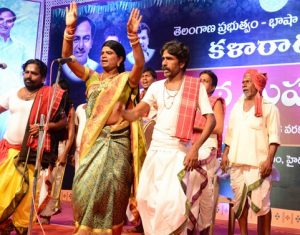
Oggukatha is a traditional folk theatre form which is an ancient narrative form of Telugu speaking regions. It derives its name from ‘Oggu’ – a small hand drum associated with Lord Shiva and literally means, ’oggu tales’. It is performed by the pastoral communities like Kuruma and Golla(Yadav’s), of the Deccan plateau.
These tradition-loving and ritual-performing troops move from place to place, narrating the stories of their caste gods. Oggu Poojaris are the traditional priests of the Yadav’s and perform the marriage of Mallanna with Bhramaramba. Oggukatha is performed in different contexts ranging from Hindu mythologies to general issues of the society. More than 100 Oggukatha groups exists today, each comprising of 4 to 6 performers.
Late Middey Ramulu and Chukka Sattaiah were the most famous artists who made the form very popular. The performance and its training comprises of ten types of singing styles, dance movements, makeup, costumes, unique use of musical orchestration with instruments etc. Improvisation and imagination are the other major key elements in this form. This makes the learning process more tedious and time consuming.
As time is changing this age-old tradition is undergoing many changes and there is a need to develop proper attention towards teaching and training methods of this form, in order to transfer it to the next generation. Documentation of preparations and performances of the tradition needs to be done along with a critical analysis of the existing informal mode of teaching and training.